
How do you choose a bonding primer before applying render?
Published on
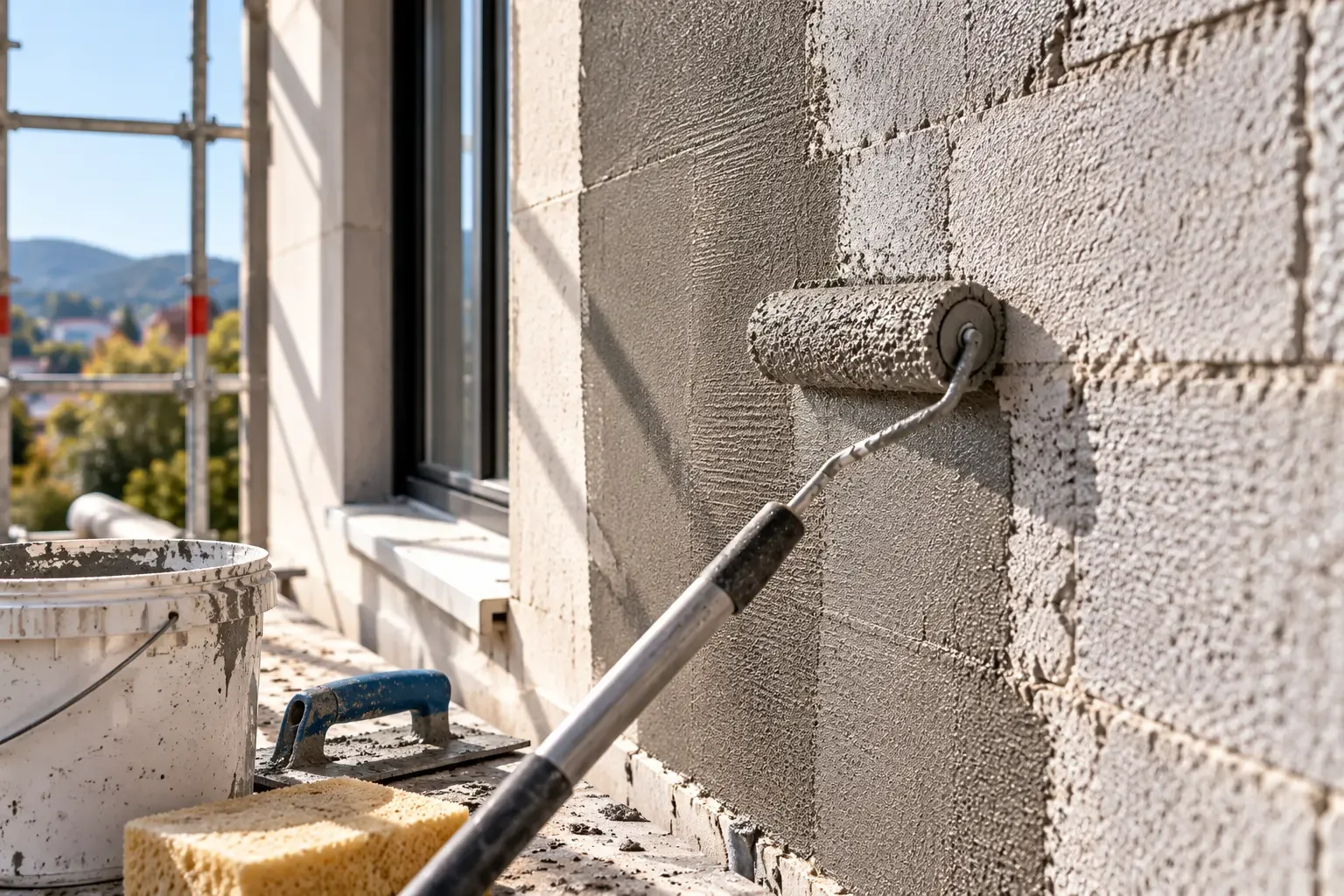
Render that peels or cracks is rarely caused by the render alone. The problem often lies underneath: a poorly prepared, overly absorbent or very smooth substrate. Primer manages this interface.
Substrate preparation comes first
Before choosing a primer, inspect the wall. A sound substrate must be clean, cohesive, dry and free of loose material. Dust, grease, laitance and chalking paint prevent lasting adhesion.
A scraper or tape test often reveals weak areas. Hollow or crumbling zones must be removed and repaired before application.
What a primer actually does
Primer does not replace preparation. It regulates absorption to prevent the render drying too quickly and creates a keyed surface to which the next coat can bond.
- Highly absorbent substrate: a regulating primer limits premature drying.
- Smooth or closed substrate: a textured bonding primer improves mechanical grip.
- Mixed substrate: primer evens out absorption and drying.
When is it useful?
On façades it is often specified before decorative finishes, especially on old or mixed substrates. Indoors it is commonly used before skim coat on plasterboard, concrete or sound existing paint.
Selection always depends on the substrate and render system. Compatible products, ideally from the same system, reduce incompatibility risk.
Points to check
- The render technical data sheet.
- Primer and render compatibility.
- Drying time before recoating.
- Temperature, humidity, sun and wind.
- Stated coverage for quantity planning.
In summary
A good primer improves a sound substrate; it cannot rescue a bad one. Diagnose first, choose the suitable product and follow the manufacturer’s technical documentation.